When Multiple Insurers Deny Your Uber Claim in Missouri, Your Case Isn’t Over
If you’ve been seriously injured in an Uber or Lyft crash in Missouri and both the driver’s personal insurer and the rideshare company’s insurer have denied your claim, you have options. This frustrating position, mounting medical bills for head injuries, spinal damage, or catastrophic harm while insurers point fingers, is exactly what Missouri law anticipated. Understanding how these layered insurance obligations work and having the right legal team can make the difference between an inadequate outcome and full recovery.
Horn Law moves quickly after an accident, builds stronger cases, and handles every case from start to finish to maximize recovery. If you or someone you care about has been injured, contact us today at 816-795-7500 for same day representation.
Why Rideshare Insurance Denials Happen More Often Than You Think
Personal auto policies commonly exclude coverage when a vehicle is used for livery or commercial purposes. If a driver was logged into the Uber or Lyft app at the time of your crash, their personal insurer may deny the claim outright. Under RSMo § 379.1708, personal auto insurers in Missouri are expressly permitted to exclude coverage for losses that occur while a driver is logged on to a TNC’s digital network or transporting passengers. This exclusion applies to liability, comprehensive, collision, and uninsured/underinsured motorist coverage. When the personal insurer denies coverage, the rideshare company’s insurer may also push back, disputing the driver’s status or arguing the driver’s policy should respond first.
This insurer back-and-forth delays treatment and pressures injured people into accepting less than they deserve. For someone recovering from traumatic brain injury or undergoing long-term rehabilitation, these delays carry real consequences.
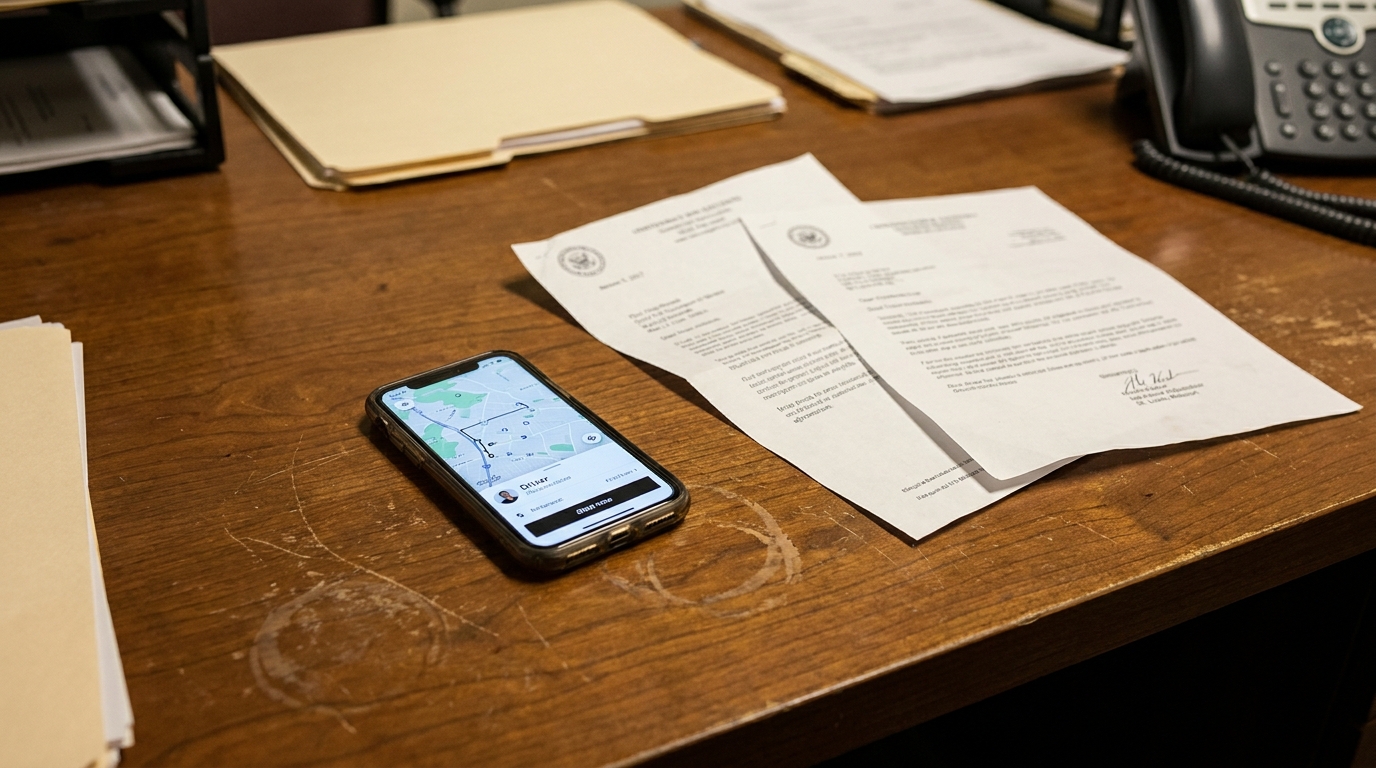
💡 Pro Tip: Document every denial letter from each insurer. These records become critical evidence to demonstrate delay tactics and force the responsible carrier to honor its obligations.
Missouri’s TNC Insurance Law: The Framework That Protects You
Missouri enacted RSMo § 379.1702 to establish clear insurance requirements for rideshare companies and drivers, effective April 1, 2017. TNC drivers or the company must maintain primary automobile insurance that recognizes rideshare activity and provides coverage while the driver is logged on or engaged in a prearranged ride.
The law creates distinct coverage requirements based on the driver’s status at the time of the accident.
Coverage Requirements by Ride Status
| Driver Status | Minimum Coverage Required | Who Can Provide It |
|---|---|---|
| Logged on, waiting for a request (Period 1) | $50,000 per person / $100,000 per incident / $25,000 property damage | Driver, TNC, or combination |
| Ride accepted or passenger in vehicle (Periods 2 & 3) | $1,000,000 for death, bodily injury, and property damage | Driver, TNC, or combination |
This tiered structure under RSMo § 379.1702(2) and § 379.1702(3) means that during a prearranged ride, coverage must reach at least one million dollars. Identifying which period the driver was in at impact is essential to unlocking the correct policy and maximum coverage.
The First-Dollar Protection That Changes Everything
One of the most powerful provisions is found in RSMo § 379.1702(4). If the driver’s personal insurance has lapsed or does not provide required coverage, the TNC’s insurance must cover the claim from the first dollar and defend it. The law places the obligation squarely on the rideshare company’s insurer to step in and pay.
💡 Pro Tip: If the Uber driver’s personal policy lapsed, this may strengthen your position. Missouri’s first-dollar coverage rule requires the TNC insurer to respond to the full claim immediately.
No More Waiting for the Other Insurer to Act First
Missouri’s first-dollar provision prevents a TNC’s insurance from sitting idle while the personal auto insurer decides whether to deny. Because the TNC’s insurer must step in and cover from the first dollar when the driver’s coverage has lapsed or is insufficient, there’s no lawful basis for the TNC carrier to condition its response on a personal insurer’s denial. An experienced Kansas City rideshare accident attorney can use this to break the logjam.
The Three Periods of Rideshare Coverage and Where Gaps Hit Hardest
Coverage gaps are most likely during Period 1, when the driver is logged in but has not accepted a ride. The National Association of Insurance Commissioners identifies three distinct periods:
- Period 1: App on, waiting for a request. Coverage limited to $50,000/$100,000/$25,000 in Missouri.
- Period 2: Ride accepted, driver en route. TNC commercial liability of $1 million applies.
- Period 3: Passenger in vehicle. Full $1 million TNC coverage remains in effect.
If your crash happened during Period 1, the lower coverage limits and potential for Uber Lyft coverage gap in Missouri make early legal involvement critical. Your attorney must quickly determine which policies were active, gather the driver’s app data showing logged-in status, and identify every available coverage source.
💡 Pro Tip: Rideshare app data is time-stamped and can be deleted. An attorney who acts immediately can send preservation demands to secure the digital evidence proving which coverage period applies.
How an Uber Accident Lawyer in Kansas City Breaks Through Dual Denials
When two insurers deny your claim, the path forward requires legal knowledge and strategic pressure. A Missouri rideshare coverage dispute requires understanding the interplay between personal auto policies, TNC commercial coverage, and state law.
The first step is establishing exactly what happened and when. This means securing driver app logs, obtaining the police report, collecting witness statements, and documenting injuries thoroughly. The case must be handled correctly from the beginning.
The second step involves forcing each insurer to confront its legal obligations under RSMo § 379.1702. When a personal auto insurer denies coverage based on a livery exclusion, that denial can trigger the TNC’s first-dollar obligation. Your attorney presents this statutory framework directly to claims adjusters, backed by specific policy language and driver status data. Understanding uninsured motorist coverage also becomes important, as UM/UIM provisions may provide additional recovery for serious injuries.
💡 Pro Tip: Under RSMo § 379.1702(8), Missouri TNC drivers must carry proof of coverage and provide insurance information upon request. Under RSMo § 379.1708(6), TNCs and insurers must cooperate in claims investigation to exchange relevant information, including precise app log-on and log-off times.
Protecting Your Recovery When Injuries Are Severe
Serious injuries from rideshare collisions, traumatic brain injuries, cervical spine damage, complex fractures, require a legal strategy accounting for both immediate costs and long-term rehabilitation. Chiropractic care, physical therapy, and ongoing neurological treatment can extend for months or years. If your case settles before the full scope is understood, you may cover future expenses out of pocket.
Horn Law builds each case by carefully developing both liability and damages, paying attention to how an injury affects daily life and long-term quality of life. Early case setup, including proper medical documentation and coordination with treatment providers, ensures no aspect of damages is overlooked.
You do not need to come into an office to get started. Horn Law offers same day representation, call and the process begins immediately. Everything can be handled digitally.
💡 Pro Tip: Keep a daily journal of symptoms, pain levels, and limitations from day one. This record supports your injury claim and helps demonstrate real impact on your life.
Frequently Asked Questions
1. What happens if both my personal insurer and Uber’s insurer deny my claim in Missouri?
If the driver’s personal policy excludes rideshare activity or has lapsed, the TNC’s insurer must cover the claim from the first dollar under RSMo § 379.1702(4). An attorney experienced in Missouri TNC insurance law can hold the responsible carrier accountable using these statutory protections.
2. How much insurance coverage does Uber carry for accidents during a ride in Missouri?
During a prearranged ride (Periods 2 and 3), Missouri law requires at least $1 million in coverage under RSMo § 379.1702(3). When a driver is logged on but waiting for a request (Period 1), the required minimums are $50,000/$100,000/$25,000.
3. Why is Period 1 the most risky time for a coverage gap?
Period 1 is when TNC-provided coverage is at its lowest level, and the driver’s personal auto policy may have excluded rideshare activity entirely under RSMo § 379.1708. This combination creates the highest risk of coverage disputes.
4. How does early legal involvement affect the outcome of a rideshare accident claim in Kansas City?
Acting quickly preserves critical evidence such as app data, surveillance footage, and witness information. Early involvement ensures injuries are properly documented from the start, which directly affects claim value and ability to recover compensation for long-term rehabilitation needs.
Taking Control of Your Rideshare Injury Claim Starts Now
When multiple insurers deny coverage after an Uber or Lyft crash in Missouri, the law provides a clear path forward for injured people who act decisively. RSMo § 379.1702 was designed to prevent these coverage gaps, but enforcing those protections requires an attorney who understands layered insurance obligations, preserves evidence immediately, and builds the case to maximize recovery.
Horn Law is here after a collision. With a 35-year track record of maximizing injury claims, we provide the guidance and support you deserve. If you or anyone you know has been injured, contact us today at 816-795-7500 for same day representation.